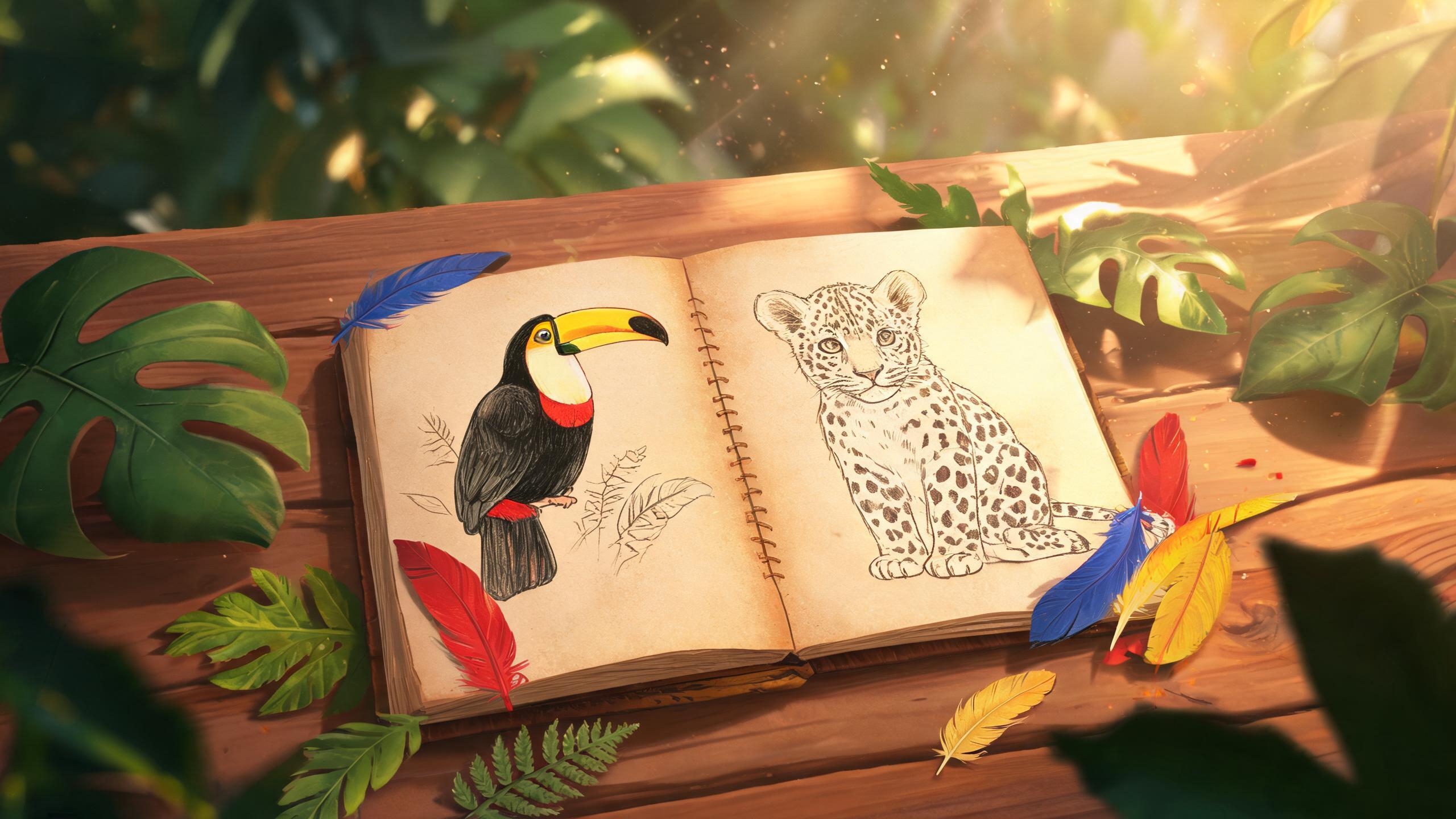
Every animal in Planet Zoo 2 comes with a dossier, and the Zoopedia is where it lives. The encyclopedia covers all 136 species at launch, from the Sumatran tiger to the giant Malaysian leaf insect, and Frontier rebuilt it for the sequel in a way that reflects how central education has always been to this franchise. If the first game's Zoopedia felt like a reference card, the new one reads like a field guide.
This page explains exactly what changed, walks through the anatomy of an entry, and shows how to turn that information into better husbandry decisions. It pairs with the animal list, which documents the roster species by species, and the animals hub, which covers the enclosure systems the entries feed into.
What Changed: From Pop-Up Cards to Full Pages
The structure of the Zoopedia is the biggest visible upgrade. In Planet Zoo 1, every animal got a small circular profile picture, and clicking one opened a compact pop-up with just three data points: the animal's category, its region and its conservation status. It worked, but it treated information as a footnote rather than a feature, and DLC species were distinguished only by a small badge on the portrait.
Planet Zoo 2 replaces the pop-up with a full page for every species. The portraits are larger and drawn in a new stylized art style, and clicking through takes you to an overview that leads with general information about the animal, its native region shown on a map, and its complete taxonomy from class down to genus. From there the page divides into substantial text blocks, one for conservation and one for social and reproductive behaviour, before closing with a few fun facts about the species.
The web version of the Zoopedia, which Frontier published before launch, mirrors this layout and even doubles as a species reveal platform. Weekly updates added animals one batch at a time, complete with a countdown widget that teased the next drop using animated transport crates in three colours that observant fans mapped to aquatic, terrestrial and bird reveals. Frontier also used broader common names this time: the European bison replaces the first game's wisent, and the grey wolf arrives under its more familiar name rather than the timber wolf label.
Inside a Zoopedia Entry
A Planet Zoo 2 entry is organized in layers, and knowing the layers makes lookups fast. The identification layer gives you the species name, scientific classification and a map of its native range, so you can place an animal geographically before you place it in a zoo. The conservation layer is a full paragraph rather than a one-word label, covering the species' rank on the IUCN Red List and its wild population situation; the web entries for the African penguin and Sumatran tiger, both listed as endangered, show how much context that single status now carries.
The behavioural layer covers social life and reproduction in detail: courtship behaviours, how long a pregnancy or incubation lasts, and how the species lives in groups. The lifecycle information extends this with lifespan, wild mating season and reproduction habits, and mating season matters mechanically because seasons in the game affect breeding. Finally, each entry closes with fun facts that are genuinely useful for exhibit design and signage choices.
Coverage from launch week adds a layer the old game never had: each entry shows which Wildlife Reserves the species inhabits, so the encyclopedia now reaches outside your zoo walls. The Eurasian bittern's entry, for example, ties the species to the Polish reserve.
Using the Zoopedia for Everyday Husbandry
The in-game Zoopedia is where reference turns into decisions, because it carries the numbers that govern welfare. Each species' entry states the enclosure space it needs along with its water, land and climbing preferences, which together define whether a habitat will actually satisfy the animal before you spend a single piece of path. The official player guides lean on this directly, noting that animals require a population range of their own species for their social group, with some preferring large herds and others a solitary lifestyle.
Social data goes deeper than a headcount. Entries detail each species' maturation type, population limits and gender limits, and the guides point out that mixed groups often have different male and female limits than bachelor groups, so a planned breeding program reads different numbers than an all-male enclosure. Gender ratio preferences are listed too, which saves you from discovering them through unhappy animals.
Research adds the last decision layer. As you study animals you unlock relationship data showing which species have thriving relationships and which are merely neutral together, turning cohabitation from guesswork into a recorded fact. Combine that with each entry's niche information, such as classifying a bird as an aerial forager and predator, and the Zoopedia effectively becomes your checklist for every habitat, aviary and aquarium you build. If you want the wider management loop these choices feed into, our guide hub collects it, and our is it worth it review covers how the systems fit together.
A practical workflow shows how quickly the habit forms. Suppose you want to build around the golden lion tamarin: its entry identifies it as an endangered Deluxe primate, lists the climbing preference and social group numbers you must respect, and points you to the gender limits that decide whether you buy a breeding group or a bachelor one. You confirm which species research says it tolerates, and only then do you lay out the enclosure. The same loop works in reverse when an animal is unhappy: the welfare panel flags the failing need, and the entry tells you which threshold was missed. Over time, players stop guessing and start designing from the entry outward.
The Zoopedia Beyond the Game
The web Zoopedia deserves a bookmark even for players who already own the game. It lists all 136 species with their stats and preferences, it loads faster than the in-game menu when you just need to check one fact, and Frontier finished its pre-launch rollout there with an animal bingo event that confirmed the final twelve species in October 2026. The studio has also said the roster will keep growing after launch, which makes the page the natural place to watch for additions.
One small extra: subscribing to the newsletter attached to the web Zoopedia grants an exclusive hawksbill turtle statue for use in your zoos, a neat crossover between the reference tool and the building game.
Zoopedia Questions, Answered
Players most often ask how the new entries compare to the old ones, and the short answer is scope: three data points became a full research page, and the husbandry numbers that used to hide in menus now sit alongside the biology. The second common question is whether the web version matches the game, and it does for education content, with the in-game encyclopedia adding enclosure dimensions and preference sliders the site leaves out.
Finally, new players often ask whether they need to read entries at all. Strictly, no, but every welfare warning the game throws at you traces back to a number in the Zoopedia, and ten minutes of reading before building a habitat saves far longer troubleshooting an unhappy animal afterwards.